How to organize reusable containers in a small kitchen
· Editorial team newsfromportland24.com
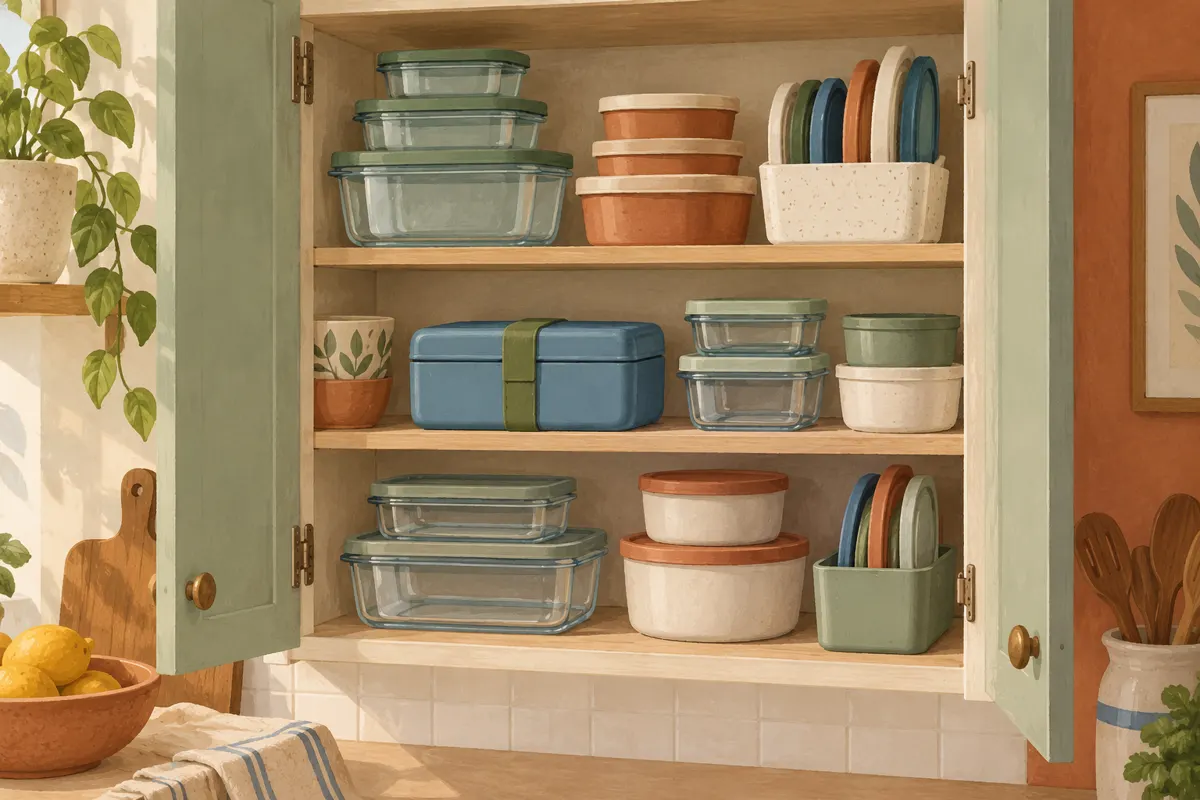
Organize reusable containers by matching every base with its lid, nesting similar shapes and reserving an easy-to-reach spot for everyday lunch boxes. Keep spare lids upright beside their matching containers, and give occasional-use pieces a separate space. The proposed routine below uses your existing cupboard, drawer and containers, so you can start without buying organizers.
Empty the cupboard and match every lid
Start with one cupboard or drawer, including any containers sitting on the drying rack. Clear enough counter space to see the collection together. Leave containers currently holding food where they are, but allow space for them when you arrange the cupboard.
- Separate all bases from their lids and group bases by shape.
- Fit each lid onto its likely base. Check that it closes properly instead of relying on appearance.
- Set complete pairs together, then separate unmatched pieces.
- Choose the containers you regularly use for lunches, leftovers and larger portions.
- Move pieces belonging to someone else into a return pile so they do not become permanent cupboard residents.
An unmatched base can become a lid holder if its shape works. Otherwise, keep unmatched pieces in a small temporary holding spot while you check the rest of the kitchen. Give that spot a clear limit: one container, rather than an expanding pile of possible matches.
Choose a collection that fits your routine
Decide what earns space by thinking about an ordinary week. How many lunches do you pack before washing up? Which sizes actually hold your leftovers? Keep enough for those uses, plus the occasional pieces you can name a purpose for. A container that rarely leaves the cupboard should not block one you use each morning.
- Everyday: lunch boxes and the small or medium containers you reach for repeatedly.
- Occasional: larger boxes used for batch cooking, baking or taking food elsewhere.
- Surplus: duplicates and awkward shapes you consistently pass over.
Set a physical boundary for the collection, such as one shelf or one drawer section. If everything only fits when balanced in a complicated tower, reduce the collection or move occasional pieces elsewhere. Leave enough room to remove a base without unloading the entire shelf.
Nest bases and file lids beside them
For the proposed lid system, use an existing open container as a holder and stand lids inside it like files. Arrange them from small to large, with round lids together and rectangular lids together. Place the holder beside the corresponding bases so choosing a pair involves one small area.
Nest bases only when they fit comfortably and separate easily. Make distinct stacks for round, square and rectangular containers. Keep unusually shaped lunch boxes outside those stacks, with their lids alongside them. Do not force every piece into one nesting arrangement just because it technically fits.
If several lids look almost identical, an optional matching aid is to put the same small symbol on the exterior of each base and lid. Follow the label or marker’s care instructions, and keep markings away from food-contact surfaces. For a small collection, grouping by shape and size may be enough.
Make a grab-and-go spot using existing storage
Reserve the front of an accessible shelf for your most-used lunch box, its lid and any small containers that travel with it. Store that lunch set together if separating it creates a daily search. Put general leftover containers beside it and occasional pieces farther back.
Small-kitchen storage guides suggest using vertical space and organizers to make cupboard contents easier to reach. Apply that idea with what you already own: an existing shelf insert can separate short stacks, while a spare tray can keep a lunch set together. Check that the cupboard door closes and each item lifts out easily.
- In a deep cupboard, place everyday containers at the front and occasional ones behind.
- In a drawer, keep stacks low enough to clear the opening and lids within their holder.
- On a narrow shelf, put the lunch set at one end and nested bases at the other.
Keep the system easy to reset
Return clean, fully dry bases to their shape groups and lids to the holder. Keep the grab-and-go space available even when its lunch box is elsewhere. That empty space has a purpose; it is not an invitation to squeeze in another stack.
When another takeout container arrives, decide whether it replaces something or has a useful place within your existing limit. If lids start collecting loose again, check for missing bases before adding another holder. Adjust the arrangement when your routine changes, keeping the pieces you reach for most in the easiest spot.